PHOTO: © Visual: Yukiko
Routes & Roots: Das gemeinsame Erbe von Gnawa und transatlantischer Yoruba-Kultur
In the organizer's words:
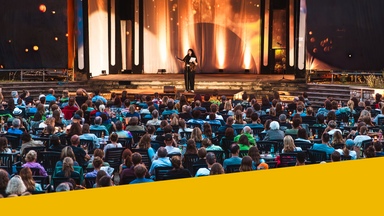
The panel on the opening weekend of the festival will look at the historical and cultural routes along which the Gnawa tradition is related to the transatlantic Yoruba cultures - Candomblé, Lucúmí/Santería and Vodou. Originating from what is now south-western Nigeria and parts of Benin and Togo, the Yoruba civilization developed a multi-layered spiritual system around the worship of Oriṣa, Ifá divination and a rich musical-ritual practice. Yoruba scholar Félix Ayoh'Omidire presents his thesis that Yoruba spirituality is to be understood as a common source whose ramifications spread via two different routes of trade with enslaved people: via the transatlantic trade route to Brazil, Cuba and Haiti (Candomblé, Santería, Vodou), and via the trans-Saharan trade route through which enslaved people were brought to Morocco (Gnawa). A perspective that conceptually supports the entire festival.
Mohcine Ramdan, linguist at the Ludwig-Maximilians-Universität in Munich, musician and band leader of Jisr, will follow up with an overview of Gnawa today: from its sub-Saharan origins and the caravan routes that brought it to Morocco, to the codification of Lila and the central role of Maalem, to its current reality between ritual, festivalization, pop-cultural crossover and diasporic transmission in Europe.
Margherita D'Amelio, pizzica and tarantella therapist and dancer from Salento, follows the echoes of the gnawa northwards across the Mediterranean. The Apulian tarantella and the healing pizzica belong to another Mediterranean network of trance and healing rituals, in which rhythm, repetition and physical discharge work according to surprisingly similar principles as in the Lila - a northern echo of the same sonic and ritual logic.
Alaa Zouiten, oud player and curator of the festival, adds in his input from his own practice how deeply flamenco - long regarded as an original Andalusian art form - is interwoven with North African and especially Gnawa influences. From the perspective of a Moroccan musician who has been working at the interface of flamenco and gnawa for years, Andalusia does not appear as a border, but as a continuum - the northern shore of a single musical sea.
Each of the four voices will be accompanied by a master practitioner of their respective tradition, who will provide a sonic foundation for the theoretical insights with short live demonstrations - and thus open the entire festival, which will explore these interconnections over four weekends.
Location
You might enjoy this as well?






Noch mehr Events dieser Location-Page