PHOTO: © allerweltshaus.de
Das Climate Crashout Cinema

In the organizer's words:
Open-Air Festival
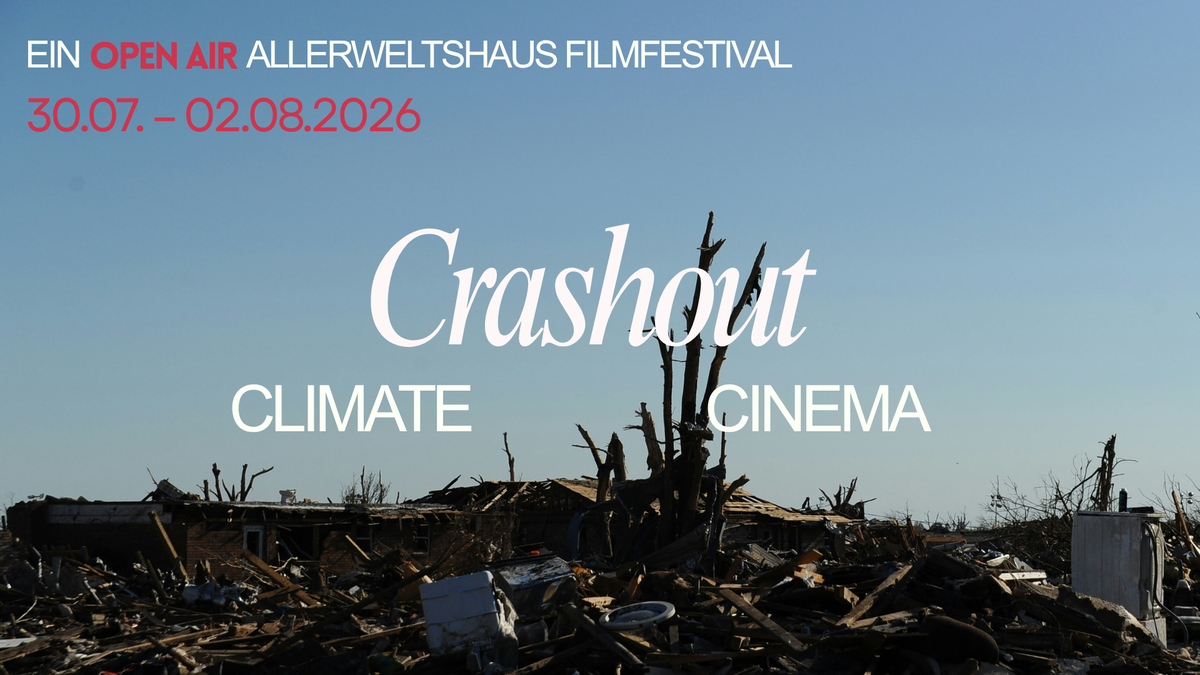
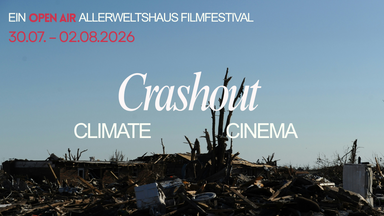
The Allerweltshaus invites you to Climate Crashout Cinema! From July 30 to August 2, 2026, experience four summer nights filled with moving films, engaging discussions, and an open-air atmosphere centered on the theme of climate justice.
We’ll be screening films on the most pressing issues of our time: climate change, resource and land conflicts, global injustice, and feminist resistance. In doing so, we’ll also shed light on the deep interconnections between the climate crisis, patriarchy, colonialism, and racism.
The goal is to facilitate engaging conversations, stimulate reflection, and highlight global responsibilities. To this end, we’ll offer panel discussions, roundtable talks, and other formats that encourage dialogue and exchange of ideas.
During the open-air festival, additional cultural events will invite attendees to wind down the evenings together.
Everyone is warmly welcome. The festival is free and relies on donations.
The Allerweltshaus invites you to Climate Crashout Cinema, an open-air film festival taking place from July 30 to August 2, 2026. Over four evenings, we will screen films exploring some of the most pressing issues of our time: the climate crisis, conflicts over resources and land, feminist resistance, global injustice, and the interconnections between climate change, patriarchy, colonialism, and racism.
Our goal is to create a space for meaningful conversations, new perspectives, and collective exchange. Alongside the film screenings, panel discussions, open conversations, and other participatory formats will invite audiences to engage with these topics together.
Additional cultural activities throughout the festival will create a welcoming atmosphere and offer the opportunity to spend the evening together in a relaxed setting.
Everyone is welcome. Admission is free, and the festival operates on a donation basis.
PROGRAM
Welcome to this year’s film festival at the Allerweltshaus in Cologne. Together, through powerful documentaries and follow-up discussions, we’ll take a look at global power structures, ecological crises, neocolonial exploitation, and the inspiring resistance of local communities.
THURSDAY
5:00 PM | Welcome to the Allerweltshof
Reception & Get-Together: We warmly welcome you with refreshing welcome drinks in the cozy Allerweltshof. Let’s use this time to settle in, introduce our project in more detail, and strike up conversations in a relaxed atmosphere.
6:00 PM | Short Film: Angst (5 min)
- Directed by: Cologne Academy of Media Arts (KHM)
- Topic: Mental Health & Climate Crisis
- Length/Format: Short film
In an age of endless reports of disasters, two young people search for an individual and collective way to cope with the pervasive fear triggered by the advancing climate crisis. An intimate and highly topical portrait of a generation in a state of emotional emergency.
7:00 p.m. | The Illusion of Abundance (60 min // Spanish with German subtitles)
- Directed by: Erika Gonzalez Ramirez & Matthieu Lietaert (2023)
- Topic: Corporate greed, environmental destruction, and indigenous resistance in Latin America
- Award: Multi-award-winning documentary
> “The Illusion of Abundance” offers a deeply moving look at the human and ecological costs of globalization and the unbridled greed of transnational corporations in Latin America. The film follows three courageous activists in their tireless struggle to protect their land, water, and communities. The directors expose the key players as “modern conquistadors”—foreign corporations and governments that, under the guise of so-called “development aid,” profitably exploit the livelihoods of local people.
Followed by: Panel discussion & Q&A (in Spanish with German consecutive interpretation)
Moderated by cultural studies scholar Dr. Francisca Ugarte-Undurraga, we will engage in an in-depth discussion.
Panelists:
- Erika Gonzalez Ramirez (director of the film)
- Marian Henn – Latin America Specialist at FIAN
Key topics: Feminism, environmental activism, and human rights from various Latin American perspectives.
FRIDAY
5:00 p.m. | Doors open & welcome
5:30 PM | Film: Pig Feast (Pesta Babi) (90 min // Indonesian with English subtitles)
- Directed by: Dandhy Dwi Laksono & Cypri Jehan Paju Dale
- Production: WatchDoc in cooperation with Pusaka, Jubi Media, Greenpeace Indonesia, and LBH Papua Merauke (2026)
- Topic: Deforestation, land grabbing, and militarism in West Papua
- Content Warning: Graphic depictions of violence, animal cruelty, and war
> “Pig Feast” documents the extent of rapid deforestation in Indonesian-controlled Papua. For a massive, state-led “Food Estate” project, vast plantations are being established for rice, sugarcane (for bioethanol), and oil palms (for biodiesel). It is one of the largest deforestation projects in the world—paradoxically touted as the production of “renewable fuels” for the global energy transition. The film ruthlessly exposes how the Indonesian state acts as a neocolonial power, using thousands of stationed soldiers to enforce the destruction of the forests and the displacement of indigenous peoples.
6:45 – 7:15 p.m.: Discussion with Mitzi Jonelle Tan (climate activist from the Philippines, internationally known for her fight for climate justice)
7:30 p.m. | Film: Toxic Harvest: The Hidden Truth about Pesticides (60 min // English with German subtitles)
- Director: Andréa Gema
- Topic: Pesticide exports, environmental toxins, and workers’ rights in South Africa
- Format: Documentary
> This gripping documentary exposes the devastating and far-reaching effects of highly dangerous agricultural toxins in South Africa. It shows how imported pesticides—some of which have long been banned in the Global North—contaminate soil, the air we breathe, drinking water, and food, and destroy the health of the local population. The film gives a voice to the farmworkers who are directly exposed to these toxins and documents their courageous resistance against a deeply exploitative agricultural system.
Following the screening, Marilu Contreras and Alejandra Aguate Ramírez from the Mexico Initiative for Human Rights will speak about the German-funded ammonia plant in Topolobampo, Mexico, the local indigenous resistance, and ways to take action here in Germany. The Tonalli collective will provide insights into the principles of agroecology as a form of resistant agricultural practice. This will be followed by an open discussion. (Discussion in German. Translation into Spanish and English available.)
SATURDAY
2:30–3:15 p.m. Short documentary *Anger, Water, Resistance* (20 min // German)
- Director: Tim Schauenberg
A documentary about Yuli Velásquez: She defies the power of oil companies, corruption, and violence in Colombia. Together with other fishermen, she fights for the environment, for justice—and for survival. But giving up is not an option. With commentary by director Tim Schauenberg)
3:30 p.m. | Film: Mikuba (60 min // French and Swahili with English subtitles)
- Director: Petna Ndaliko Katondolo
- Topic: Cobalt mining, the energy transition, and spiritual resistance in the Congo
- Format: Documentary
> “Mikuba” takes us straight into the dusty cobalt mines of Kolwezi in the Congo. While the world craves cobalt for electric cars and a “green future,” the local people are paying the price. Right in the thick of it, the trader Mama Leance holds her own amid a web of multinational corporations. On her journey, she meets Master Kangalele, the guardian of the ancient spiritual practice *Lwanzo Lwa Mikuba*, which preserves indigenous heritage and offers a profound, cultural counter-narrative to ruthless exploitation.
Followed by: A discussion with Sarah N’Sabaka from the German-Congolese Youth Institute
The young collective will then discuss the neocolonial reality behind our seemingly clean technologies in the Global North.
5:30 p.m. | Short film: *Huellas del Viento* (15 min // Spanish with German subtitles)
- Topic: Green Energy vs. Indigenous Habitats
- Format: Short film
> The film takes a critical look at the neocolonial dynamics behind large-scale wind power projects in the Global South. It shows how clean energy is generated for major European powers, while local Indigenous communities are deprived of their quality of life, their culture, and their habitat.
Followed by: Discussion with director Paola Tamayo
6:30 p.m. | Film: Clouds Over Lützerath (90 min // German)
- Director: Lukas Reiter
- Topic: Lignite mining, climate resistance, and political compromises in Germany
> In Lützerath, the red line of climate justice was crossed for the activists. The film documents the civil disobedience and parliamentary divisions during the eviction of the village in the Rhineland lignite mining region. It depicts the painful coal compromise that sacrificed the village to the RWE corporation and raises profound questions about democracy and climate justice in Germany.
8:00 p.m.: Panel discussion on the global consequences of coal mining
- Moderator: Johanna Frei (ausgecohlt)
- Peter Emorinken-Donatus (journalist & environmental activist)
- medico international (partner organization)
- Video contribution from Pakistani small-scale farmers* on the lawsuit against RWE (international perspective on climate impacts)
- Paola Tamayo, director
SUNDAY
3:00 p.m. | Sikoqqinngisaannassooq. A Future Without Sea Ice (15 min // Greenlandic)
- Topic: Climate Change in Greenland & Indigenous Identity
- Director: Adam Sebire
- Introduction: Scandinavian Studies Student Association at the University of Cologne
A small Inuit community in Greenland (Kalaallit Nunaat) is experiencing the rapid disappearance of sea ice. In poetic interviews projected onto icebergs, the people speak about their vanishing environment in their native language, Kalaallisut. The youth write words of warning into the melting ice: Are we facing the dawn of sikoqqinngisaannassooq—a permanent future without sea ice?
4:00 p.m. | Film: The Battle for Laikipia (94 min // Swahili, English)
- Directed by: Daphne Matziaraki & Peter Murimi
- Topic: Climate change, colonial legacy, and resource conflicts in Kenya
In the Kenyan highlands of Laikipia, colonial legacy and the climate crisis collide. For centuries, the Samburu have grazed their livestock here. But white landowners and hermetically sealed nature reserves are cutting through the ancient migration routes with electric fences. Global warming is causing extreme droughts and intensifying the struggle for water and grazing land. Over the course of five years, the film documents the explosive tensions between the various parties.
Followed by: Panel discussion in English
- Guests: Moses Githinji, co-founder and representative of the Jenga Community CBO
- Marwan Ali / Sudan Rheinland AG
7:00 p.m. | Film: A Place in the City (Dr. Gabriel Silvestre) (60 min // Spanish, Portuguese, English with English subtitles)
- Topic: Displacement, Urbanization, and Collective Action in Latin America
The film follows communities in Latin America that are facing displacement, segregation, and gender inequality. It shows how people are standing up for their rights together and shaping a more inclusive urban future. The film highlights stories from Santiago de Chile, Rosario (Argentina), and Belo Horizonte (Brazil) and serves both as a tribute to collective action and a call to rethink cities.
Followed by: Panel discussion
- Guests: Marisol B. Lima (film editor) and volunteers from “Gemeinsam TECHO e.V.”
9:00 p.m. Closing remarks
PROGRAM
Welcome to this year’s film festival at the Allerweltshaus in Cologne. Through powerful documentaries and follow-up discussions, we’ll explore global power structures, ecological crises, neocolonial exploitation, and the inspiring resistance of local communities.
THURSDAY
5:00 PM | Welcome to the Allerweltshof
Reception & Get-Together: We warmly welcome you with refreshing welcome drinks in the cozy Allerweltshof. Let’s use this time to settle in, introduce our project in more detail, and strike up conversations in a relaxed atmosphere.
6:00 PM | Short Film: Angst (5 min)
- Directed by: Cologne Academy of Media Arts (KHM)
- Theme: Mental Health & Climate Crisis
- Length/Format: Short film
In an era of endless reports of disasters, two young people search for individual and collective ways to cope with the pervasive fear triggered by the advancing climate crisis. An intimate and highly topical portrait of a generation in a state of emotional emergency.
7:00 p.m. | The Illusion of Abundance (60 min // Spanish with German subtitles)
- Directed by: Erika Gonzalez Ramirez & Matthieu Lietaert (2023)
- Theme: Corporate greed, environmental destruction, and indigenous resistance in Latin America
- Award: Multi-award-winning documentary
> “The Illusion of Abundance” offers a deeply moving look at the human and ecological costs of globalization and the unbridled greed of transnational corporations in Latin America. The film follows three courageous activists in their tireless struggle to protect their land, water, and communities. The directors expose the perpetrators as “modern conquistadors”—foreign corporations and governments that, under the guise of so-called “development aid,” profitably exploit the livelihoods of local people.
Followed by: Panel discussion & Q&A (in Spanish with consecutive German interpretation)
Moderated by cultural studies scholar Dr. Francisca Ugarte-Undurraga, we will engage in an in-depth discussion.
Panelists:
- Erika Gonzalez Ramirez (director of the film)
- Marian Henn—Latin America specialist at FIAN
Key topics: Feminism, environmental activism, and human rights from various Latin American perspectives.
FRIDAY
5:00 p.m. | Doors open & welcome
5:30 p.m. | Film: Pig Feast (Pesta Babi) (90 min // Indonesian with English subtitles)
- Directors: Dandhy Dwi Laksono & Cypri Jehan Paju Dale
- Production: WatchDoc in cooperation with Pusaka, Jubi Media, Greenpeace Indonesia, and LBH Papua Merauke (2026)
- Topic: Deforestation, Land Grabbing, & Militarism in West Papua
- Warning: Physical violence, war, and animal cruelty.
> “Pig Feast” documents the extent of rapid deforestation in Indonesian-controlled Papua. As part of a massive, state-directed “Food Estate” project, vast plantations are being established for rice, sugarcane (for bioethanol), and oil palms (for biodiesel). It is one of the largest deforestation projects in the world—paradoxically touted as the production of “renewable fuels” for the global energy transition. The film unsparingly shows how the Indonesian state acts as a neocolonial power and ensures the destruction of the forests as well as the displacement of indigenous peoples through the deployment of thousands of soldiers.
6:45–7:15 p.m.: Talks on the impacts of industrial agriculture in South Asia and Southeast Asia (in English)
Guest: Mitzi Jonelle Tan (climate activist from the Philippines, internationally known for her fight for climate justice
7:30 p.m. | Film: *Toxic Harvest: The Hidden Truth about Pesticides* (60 min // English with German subtitles)
- Director: Andréa Gema
- Topic: Pesticide exports, environmental toxins, and workers’ rights in South Africa
- Format: Documentary
> This gripping documentary exposes the devastating and far-reaching effects of highly dangerous agricultural toxins in South Africa. It shows how imported pesticides—some of which have long been banned in the Global North—contaminate the soil, the air we breathe, drinking water, and food, and destroy the health of the local population. The film gives a voice to the farmworkers who are directly exposed to these toxins and documents their courageous resistance against a deeply exploitative agricultural system.
Following that, Marilu Contreras and Alejandra Aguate Ramírez from the Mexico Initiative for Human Rights will speak about the ammonia plant in Topolobampo, Mexico—which is financed with German funds—the local indigenous resistance, and ways to take action here in Germany. The Tonalli collective will provide insights into the principles of agroecology as a form of resistant agricultural practice. This will be followed by an open discussion. (The discussion will be primarily in German. Translation into English and Spanish is available.)
SATURDAY
2:30 – 3:15 p.m. Short Documentary: Anger, Water, Resistance (20 min // German)
- Director: Tim Schauenberg
A documentary about Yuli Velásquez: She defies the power of oil corporations, corruption, and violence in Colombia. Together with other fishermen, she fights for the environment, for justice—and for survival. But giving up is not an option. (With commentary by director Tim Schauenberg)
3:30 PM | Film: Mikuba (60 min // French and Swahili with English subtitles)
- Topic: Cobalt mining, energy transition, and spiritual resistance in the Congo
- Format: Documentary
> “Mikuba” takes us straight into the dusty cobalt mines of Kolwezi in the Congo. While the world is hungry for cobalt for electric cars and a “green future,” the local people are paying the price. Amid it all, the trader Mama Leance holds her own amidst the web of multinational corporations. On her journey, she meets Master Kangalele, the guardian of the ancient spiritual practice *Lwanzo Lwa Mikuba*, which preserves indigenous heritage and offers a profound, cultural counter-narrative to ruthless exploitation.
Followed by: Discussion with the German-Congolese Youth Collective (TBD)
The youth collective will then discuss the neocolonial reality behind our seemingly clean technologies in the Global North.
5:30 p.m. | Short Film: *Huellas del Viento* (15 min // Spanish with German subtitles)
- Theme: Green Energy vs. Indigenous Habitats
- Format: Short film
> The film takes a critical look at the neocolonial dynamics behind large-scale wind power projects in the Global South. It shows how clean energy is generated for major European powers, while local Indigenous communities are deprived of their quality of life, their culture, and their habitat.
Followed by: Discussion with director Paola Tamayo
6:30 p.m. | Film: *Clouds Over Lützerath* (90 min // German)
- Director: Lukas Reiter
- Theme: Lignite mining, climate resistance, and political compromises in Germany
> In Lützerath, activists drew the line for climate justice. The film documents the civil disobedience and parliamentary divisions during the eviction of the village in the Rhineland lignite mining region. It highlights the painful coal compromise that sacrificed the village to the RWE corporation and raises profound questions about democracy and climate justice in Germany.
8:00 p.m.: Panel discussion on the global consequences of coal mining
- Moderator: Johanna Frei (ausgecohlt)
- Peter Emorinken-Donatus (journalist & environmental activist)
- medico international (partner organization)
- Video contribution from Pakistani small-scale farmers on the lawsuit against RWE (international perspective on climate impacts)
SUNDAY
3:00 p.m. | Film: Sikoqqinngisaannassooq—A Future Without Sea Ice
- Topic: Climate Change in Greenland & Indigenous Identity
- Introduction: Scandinavian Studies Student Council at the University of Cologne
A small Inuit community in Greenland (Kalaallit Nunaat) is witnessing the rapid disappearance of sea ice. In poetic interviews projected onto icebergs, the people speak about their vanishing environment in their native language, Kalaallisut. Young people write words of warning into the melting ice: Are we on the brink of sikoqqinngisaannassooq—a permanent future without sea ice?
4:00 p.m. | Film: The Battle for Laikipia
- Directed by: Daphne Matziaraki & Peter Murimi
- Topic: Climate Change, Colonial Legacy, and Resource Conflicts in Kenya
In the Kenyan highlands of Laikipia, the colonial legacy and the climate crisis collide. For centuries, the Samburu have grazed their livestock here. But white landowners and hermetically sealed nature reserves have cut through the ancient migration routes with electric fences. Global warming is causing extreme droughts and intensifying the struggle for water and grazing land. Over the course of five years, the film documents the explosive tension between the various parties.
Followed by: Discussion
Guests: Moses Githinji and Marwan Ali
7:00 p.m. | Film: A Place in the City (Dr. Gabriel Silvestre) (60 min. // Spanish, Portuguese, English, and English subtitles)
- Topic: Displacement, Urbanization, and Collective Action in Latin America
This inspiring documentary follows communities in Santiago, Chile; Rosario, Argentina; and Belo Horizonte, Brazil, as they resist displacement, social exclusion, and gender inequality. It shows how neighborhoods are fighting together for just, inclusive, and self-determined urban planning. A tribute to the power of solidarity and a call to rethink our cities.
Followed by: Discussion
Guests: Marisol B. Lima (film editor) and volunteers from the non-governmental organization “Gemeinsam TECHO e.V.”
8:00 p.m. – 9:00 p.m. Closing remarks
An event presented by Allerweltshaus and in cooperation with partners and sponsors: City of Cologne Office for Development Cooperation, NRW Foundation for Environment and Development, AfrikaFilmFest, and Gemeinsam TECHO e.V.
Location
Accessibility information
We don't have any accessibility information for this event.
You can find everything about accessibility at Rausgegangen here.
Organizer | Collective

Weitere Termine von Das Climate Crashout Cinema
You might enjoy this as well?









Noch mehr Events dieser Location-Page