PHOTO: © ADIAMYEMANE
Zena

In the organizer's words:
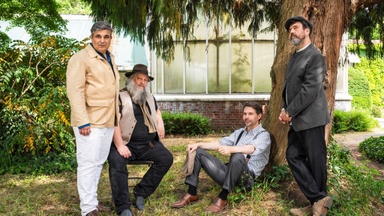
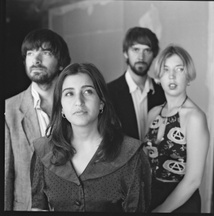
ZENA —composed of keyboardist-producer Yohan Kebede and bassist-producer Menelik Mulugeta Claffey, known simply as Menelik —is breathing new life into Ethiopian music with a London edge. Meaning “legacy” in Amharic, ZENA is forging its own legacy while building upon the traditions established by legendary Ethiopian musicians.
ZENA’s music is rooted in the Ethio-jazz that wafted through Yohan and Menelik’s childhood homes like the warmth and sacredness of etan, Ethiopian aromatic frankincense, while upholding the vibrancy and innovation characteristic of the London scene from which they both emerged. It’s mystical yet unorthodox, drawing on alternative R&B, trip-hop, dub, and psychedelic influences. It’s soulful yet sexy—rather taboo for Ethiopian traditionalists but tempting for fans of D’Angelo and Marvin Gaye.
While Yohan discovered and drew inspiration from Motown artists during high school, he has spent the last nine years performing Afrobeat, highlife, and jazz as the keyboardist and synth player for the London-based octet Kokoroko. Kokoroko released its second album, *Tuff Times Never Last*, last July, garnering critical acclaim from *The Guardian*, *The Times*, *Notion*, *Pitchfork*, *PAPER Magazine*, *The Fader*, and more, and embarked on an international tour, including the band’s largest headline show to date at the O2 Academy Brixton in London. And to this day, you can catch him playing traditional jazz every Sunday at mu in London with Rio Kai and Luke McCarthy. Psychedelic rock pioneer Jimi Hendrix initially shaped Menelik’s musical taste, but his love for jazz blossomed when he learned to play bass at age 12. Since then, the elusive musician has performed with alternative-jazz singer Divine Earth (formerly known as muva of Earth) on her debut EP *Align with Nature’s Intelligence*, harpist Alina Bzhezhinska, keyboardist and flutist Brian Jackson on the Alice Coltrane Celebration Project, and pianist and composer Bill Laurance. In 2024, Menelik was featured as a “Future Mover” in *Jazzwise*.
The two were silent admirers of each other’s work. Yohan noticed fellow London musicians tagging #menelik on Instagram videos from their gigs, and Menelik remembers watching Yohan tour with Yussef Dayes in 2018. When Yohan needed a bassist to fill in for his regular Sunday gig in late 2023, Menelik stepped in. “I’ve always wanted to create something of my own, with someone else. And that just felt like a ‘bingo’ moment,” Yohan says. Weeks later, the two began regularly jamming on covers of Hailu Mergia, Mulatu Astatke, and Admas at Yohan’s warehouse apartment in Hackney, moving on to gigs at hi-fi bars and intimate venues, and eventually four sold-out headlining shows—packed houses of young Ethiopians and Eritreans chanting every word to the tunes that had shaped their own upbringings as well.
ZENA has emerged at a time when younger generations of the diaspora have felt a collective pull back home through music, food, dance, language, fashion, and art. And while music from West and South Africa has broken into the Western mainstream and reshaped global pop, ZENA is drawing the world’s attention to Ethiopian music and highlighting East Africa within the broader conversation about African music.
“Our generation is the first group of Ethiopians and Eritreans born en masse outside our home countries, and we’re becoming more and more visible in different parts of the world, but I don’t see that reflected in the art we’re creating,” Yohan says. “Hailu Mergia, Mulatu Astatke—all of them reflected where they were at the time and pushed things forward. We have to do the same thing.”
ZENA officially introduced itself to the world by releasing a cover of Admas’ 1984 cult classic “Anchi Bale Gamé” as their standalone debut single, which was released in November via Brownswood Recordings. ZENA modernizes the snappy, synth-funk texture of Admas’ rendition of Mahmoud Ahmed’s 1980 original composition with a downtempo, electro-R&B vibe, continuing the legacy of this song. OkayAfrica described ZENA’s “Anchi Bale Gamé” as “a spiritually satisfying exchange between two maestros of sound.”
“We have this push-and-pull dynamic where he’s always like, ‘Don’t overthink it, man.’ And I’m always thinking, ‘I know it sounds good, but what’s the bigger picture?’ That push-and-pull creates a perfect balance that you hear on the record,” says Yohan.
ZENA’s debut EP, *TEMESGEN*, which is set for release on March 20, 2026, is named after the Amharic word meaning “to be thankful,” and this gratitude for Yohan and Menelik’s shared heritage permeates the entire project. Across six tracks, ZENA expertly fuses time-honored Ethiopian melodies with forward-thinking Western instrumentation. Hand-clapping rhythms and muffled chanting invite listeners to eskista, the traditional Ethiopian dance featuring expressive, rapid movements of the shoulders and neck, on the first single “My Love Your Love,” where Menelik’s thumping bass groove reminds Yohan of something you’d hear on D’Angelo’s *Voodoo*. Menelik later manipulates the bass to sound like the krar, an Ethiopian bowl-shaped lyre, on “Kazanchis.” The second single, “It’s You (Ante Neh),” featuring South London-based Ethiopian-Eritrean R&B singer Meron T, showcases ZENA’s Ethio-pop sensibilities, which are often overshadowed by Ethio-jazz when recalling Ethiopia’s golden age of music. “It was important to reference that sound and create a catchy tune that sounds Ethiopian but could also be a Khruangbin sound,” Yohan says. And the final title track serves as the tizita—the Amharic word for “nostalgia” and a popular musical genre often referred to as “the blues of Ethiopia” because it evokes bittersweet memories from the past.
By carrying on the tizita tradition of Mulatu Astatke, Mahmoud Ahmed, and their Éthiopiques predecessors, Yohan and Menelik are demonstrating through ZENA that they are ready to take up the torch and continue fueling the world’s contemporary interest in vintage Ethiopian music. “I hope it’s music that stays with people. I hope it’s music that people return to and connect with in their own way. That’s the beauty of instrumental music—it’s not necessarily someone telling you a story. It attaches itself to your own memories in ways you might not expect,” says Menelik.
After performing nearly a dozen gigs in their native London over the past year, ZENA performed in Ethiopia for the first time in January during the bustling diaspora season at Fabrica. With upcoming sets at The Jazz Café on February 20 (opening for the Somali funk/disco band Dur-Dur), the Brick Lane Jazz Festival in April, and the Cross The Tracks Festival in May, ZENA is determined to take the timeless sounds of Ethiopia beyond its homeland.
Written by Heran Mamo
Location


You might enjoy this as well?














Noch mehr Events dieser Location-Page