Rautenstrauch-Joest-Museum
In our words:
65,000 objects from Oceania, Africa, Asia and America, a collection that tells world stories and a museum that does not provide simple answers, but asks the right questions. The Rautenstrauch-Joest Museum is not a place to pass through quickly. It is a place where you pause, reflect and leave the world a little bit differently than when you entered it. Directly on Cologne's Neumarkt, two minutes from the nearest KVB stop: just go there.
In the location's words:
Rautenstrauch-Joest-Museum Cologne - Cultures of the World in the heart of the city
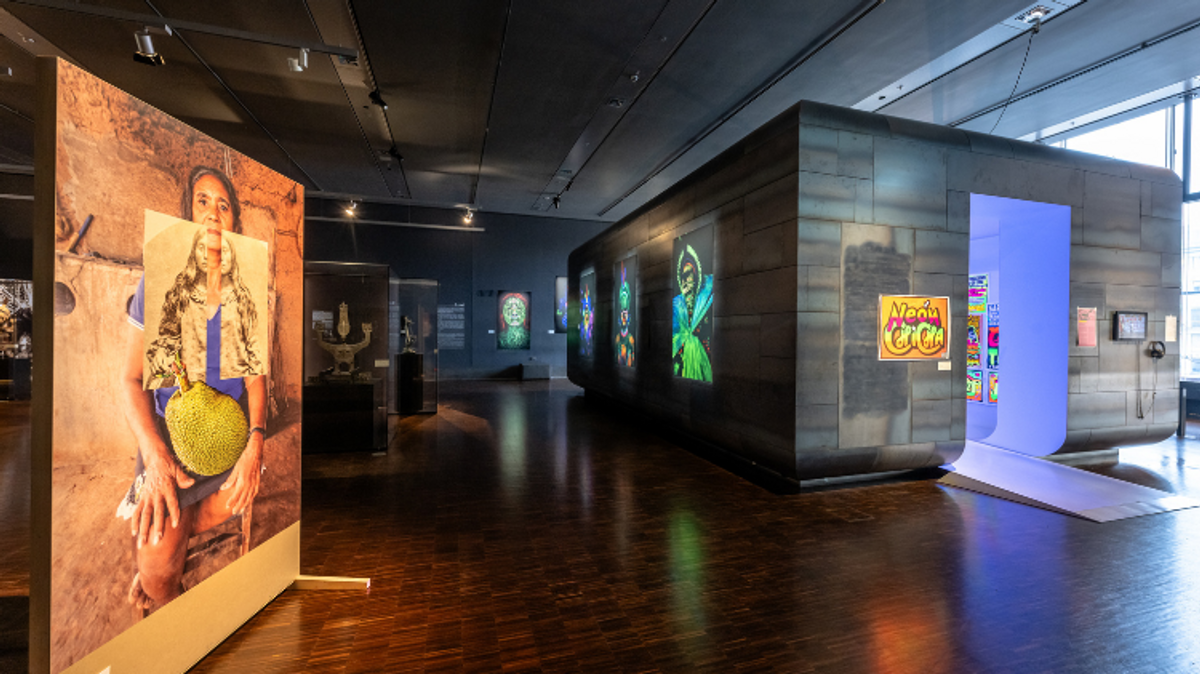
In the heart of Cologne, directly on Neumarkt, lies one of the most important ethnological museums in Europe: the Rautenstrauch-Joest-Museum - Cultures of the World. It is undergoing an ongoing process of transformation and critically reflects on its colonial collection history. New perspectives are being developed in collaboration with communities of origin and diasporic communities. The permanent exhibition is being gradually renewed in order to include diverse voices and create spaces for dialog and active participation.
Where cultures of the world come together: The Rautenstrauch-Joest-Museum Cologne and its history
The RJM was founded in 1901 during the colonial era. A large part of the collections date from before the First World War. Today, the collections comprise around 60,000 material cultural objects and around 100,000 photographs from Africa, Asia, America and Oceania. Based on this historical collection, the focus is shifting to an examination of the colonial legacy.
The RJM is testing new forms of collaboration in order to develop a post-colonial approach to the collections. The museum was opened in 1906 in Cologne's Südstadt district on Ubierring. In 2010, after 15 years of planning and construction, it moved into its modern new building on Neumarkt and was awarded the Council of Europe Museum Prize in 2012. Since then, it has been one of the most talked about ethnological museums in the German-speaking world.
What awaits you at the Rautenstrauch-Joest-Museum Cologne
Permanent exhibition and interventions
The permanent exhibition, which opened in 2010, is being gradually renewed. This will create spaces for diverse voices, languages, narratives and forms of knowledge. Places such as the Yellow Room with an anti-colonial library or the SPACE4KIDS as a creative space for children and young people invite visitors to think, feel and help shape the exhibition. Children, teenagers and young adults have a right to museums and cultural participation and actively help shape the RJM.
The intervention "I MISS YOU" focuses on missing, giving back and remembering. It is about objects that have been in the museum for a long time and are being shown in a new light. What do they tell us? What history do they conceal - from where, from when and about whom? Who made them? Who loved and honored them? The intervention "THE FUTURE IS INDIGENOUS - Amazonian Visions and Struggles" makes indigenous voices audible that are often neglected in global climate debates: Indigenous artists, activists and thinkers from the nine countries of the Amazon region contribute their perspectives.
Current special exhibition
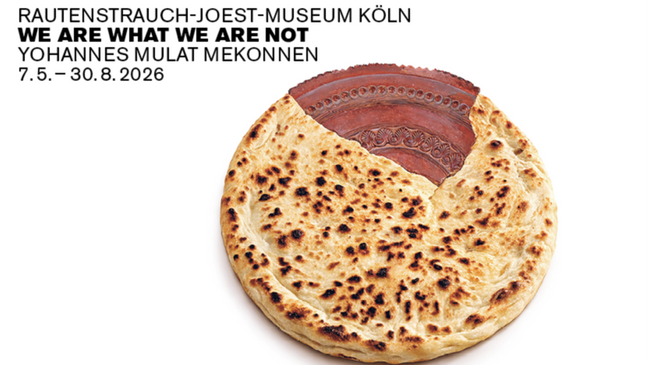
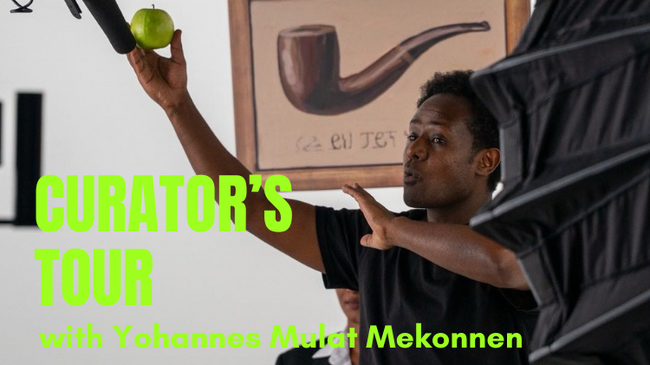
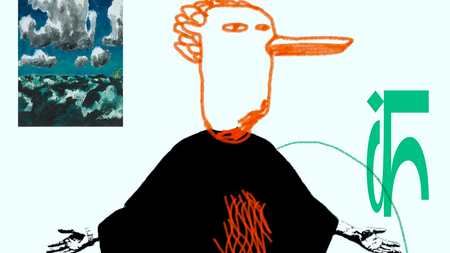
From May 7 to August 30, 2026, the RJM is showing the special exhibition WE ARE WHAT WE ARE NOT. It invites you to experience the museum in a different way: not through what is on display, but through what is missing. The artist and curator Yohannes Mulat Mekonnen focuses on gaps in the collection and makes absence itself a theme. What awaits you is an exhibition that is both analytical and poetic, questioning colonial museum history and opening up new, sensual approaches.
Guided tours and workshops
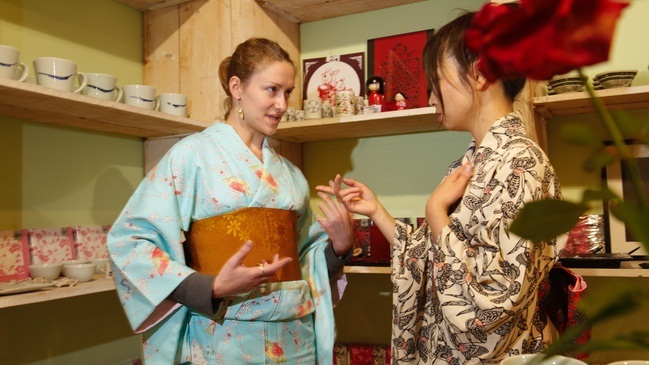
The Rautenstrauch-Joest-Museum is a place where encounters and exchanges take place. With guided tours, workshops for adults and children, walk-and-talks, SPACE4KIDS, gamelan courses, school activities and the YELLOW ROOM as a third meeting place, the museum offers a broad program that reflects and actively involves Cologne's diverse urban society. It is worth checking the calendar of events regularly.
Museum café & store
After your visit to the museum, the café on the first floor and the sun terrace invite you to linger. In the museum store, you will find a curated selection of books, publications and souvenirs relating to the museum's themes.
Diversity as an attitude
The Rautenstrauch-Joest-Museum has long since set out to help shape diversity-sensitive change - for example through a much-noticed change of perspective in the permanent exhibition or through new content in special exhibitions. The ethnological museum of the future is a place for conversation, exchange and encounters.
Free admission for refugees and their accompanying persons.
Practical information: Tickets, opening hours & directions
Opening hours:
- Tue to Sun: 10 am to 6 pm
- Thu: 10 am to 8 pm
- First Thursday of the month: 10 am to 10 pm
- Mon and 24.12., 25.12., 31.12., 1.1., Weiberfastnacht and Rosenmontag: closed
Tickets:
- Permanent exhibition: €7 / reduced: €4.50
- Special exhibition: €6 / reduced: €4
- Combination ticket permanent and special exhibition: €9 / reduced: €7
- Combined ticket RJM and Museum Schnütgen: € 10 / reduced: € 7
- Groups of 10 or more: € 4.50 per person
- Special discounts for people with severe disabilities (GdB from 50%)
Address: Cäcilienstraße 29 to 33, 50667 Cologne
Directions by public transport: Neumarkt stop (2-minute walk), KVB lines 1, 3, 4, 9, 16, 18 and bus lines 136 and 146
Parking: There is a parking garage directly under the Rautenstrauch-Joest-Museum.
Accessibility: The Rautenstrauch-Joest-Museum Cologne is wheelchair accessible. The event hall is equipped with induction loops. Free video guides in sign language are available for deaf people.
Frequently asked questions about the Rautenstrauch-Joest-Museum in Cologne
1. may I take photographs in the Rautenstrauch-Joest-Museum?
Yes, photography is permitted for private purposes in the foyer and in the permanent exhibition as long as you do not use a tripod or flash. For commercial photography or photos for publications, please contact the museum administration in advance at rjm@stadt-koeln.de.
2. can I visit the Rautenstrauch-Joest-Museum Cologne together with another Cologne museum?
Yes, there is a combined ticket for the Rautenstrauch-Joest-Museum and the neighboring Museum Schnütgen at a reduced price. Ideal if you are planning a whole day of culture in Cologne.
3. are there audio guides or other orientation aids in the Rautenstrauch-Joest-Museum Cologne?
The Rautenstrauch-Joest-Museum offers audio guides to borrow on site and as MP3 downloads. For deaf visitors, video guides in sign language are available free of charge at the information desk in the foyer. You can also download an orientation map as a PDF in advance to help you plan your visit.
4. what are the gamelan courses offered by the Rautenstrauch-Joest-Museum Cologne?
The Rautenstrauch-Joest-Museum regularly offers gamelan courses. This means you can learn and experience the traditional ensemble musical instrument from Indonesia directly in the museum. An unusual and very personal cultural experience that goes far beyond a normal museum visit.
5 What is the YELLOW ROOM in the Rautenstrauch-Joest-Museum Cologne?
The YELLOW ROOM is an open meeting space in the museum, a so-called "third place". A space for co-creation, asking questions, discussing, learning and coming together. As a social space beyond home and work, it is open, participative and lively - a place that enables exchange and allows community to grow.
6 Does the Rautenstrauch-Joest-Museum in Cologne offer special programs for school classes?
Yes, the Rautenstrauch-Joest-Museum offers a wide range of programs especially for schools, from age-appropriate guided tours and workshops on various cultural topics to project days. The offers are tailored to different age groups and can be booked directly through the museum .
7 Where can I find current events and special exhibitions at the Rautenstrauch-Joest-Museum in Cologne?
The program of the Rautenstrauch-Joest-Museum changes regularly. Here on Rausgegangen you can find all current events, exhibitions and highlights directly in your city, curated, clearly arranged and always up-to-date. If you don't want to miss anything, you can also follow the museum on Instagram, Facebook and YouTube.
This content has been machine translated.Opening hours
Dienstag: 10:00 - 18:00
Mittwoch: 10:00 - 18:00
Donnerstag: 10:00 - 20:00
Freitag: 10:00 - 18:00
Samstag: 10:00 - 18:00
Sonntag: 10:00 - 18:00