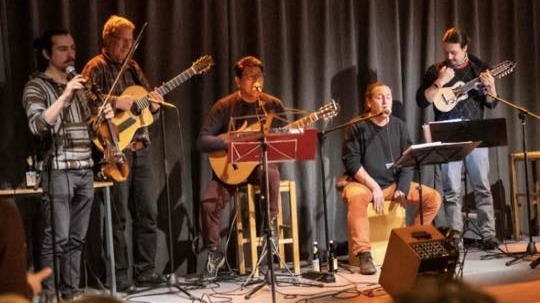
PHOTO: © Wasitaki
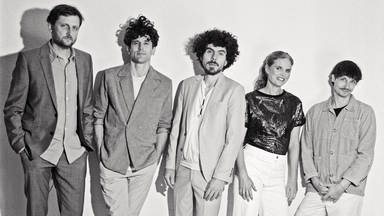
Wasitaki bei der Internationalen Musikkneipe
In the organizer's words:
With vocals, guitars, violin, and cajón, you can look forward to an atmospheric evening filled with Chilean folk music and Latin American sounds.
The name Wasitaki comes from Quechua, the language of the indigenous peoples of the South American Andes, including the Incas.
It means “House of Music,” as the band rehearses at a music store in Freiburg.
The name reflects a connection to the indigenous peoples of South America, though Wasitaki’s songs are in Spanish and no more than 60 years old. Some draw from the tradition of the “New Chilean Folk Song”
which emerged shortly before the 1971 coup and during the subsequent period of resistance against the dictatorship (Victor Jara, Violetta Parra, Inti Illimani, Illapu), and partly from music groups and singer-songwriters from other countries, particularly Silvio Rodriguez from Cuba.
In the lyrics, we encounter the typical South American blend of poetry, introspection, and powerful political statements; in the music, we find pure joy in playing and singing, as well as virtuosity.