PHOTO: © Fritz Bauer Forum
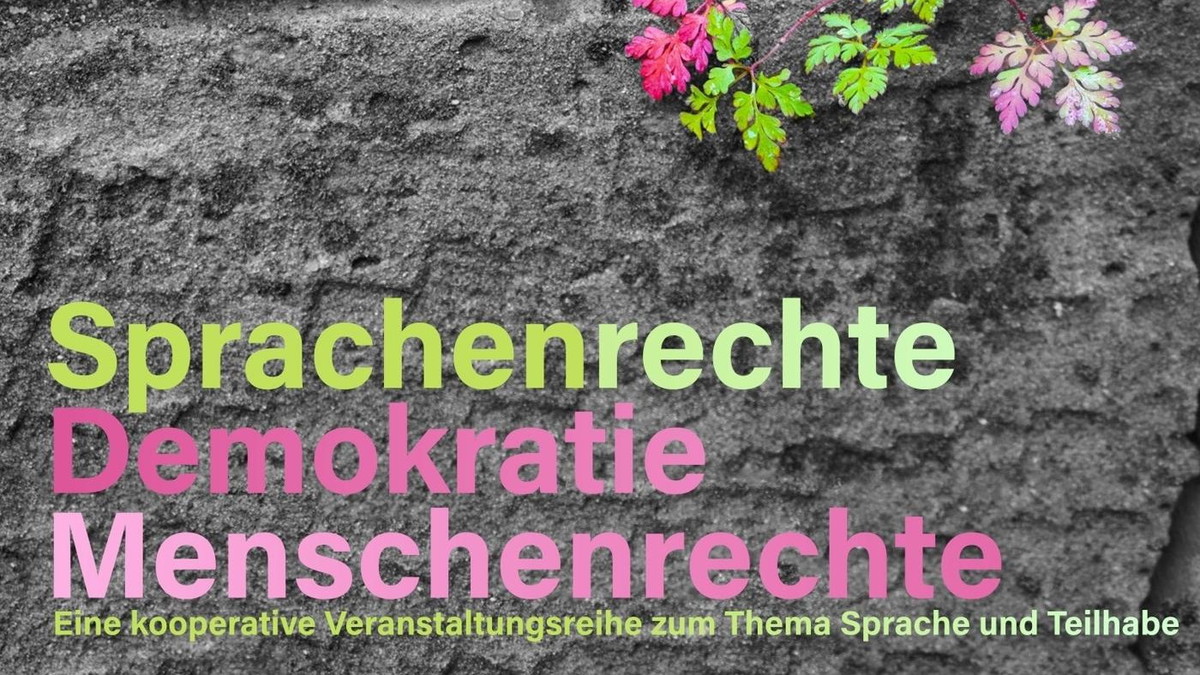
Sprachenrechte sind Menschenrechte und eine Grundlage unseres demokratischen Zusammenlebens
In the organizer's words:
Language Rights – Democracy – Human Rights
Two Short Talks & Discussion
1st Short Presentation by Prof. Dr. Hans-Jürgen Krumm (University of Vienna):
“Language Rights and Linguistic Justice in Society and Schools”
Languages have different values in our society: Some are promoted and learned, while others—especially the languages of minorities and people with immigrant backgrounds—are widely spoken but often merely tolerated, and even in schools they exist on the margins or are outright banned. Examining the relationship between language and power serves as the starting point for addressing the question of the state of “linguistic justice” and how it can be achieved in society and schools.
2. Short presentation by Prof. Dr. Andrea Daase (University of Bremen):
“Language Education as a Means of Enabling Democratic Linguistic and Communicative Interaction in Linguistically Diverse Communities—A Task for the Inclusive School”
While, since the PISA studies around the turn of the millennium, language education has focused primarily on developing so-called “academic language” skills—especially among students from immigrant families— this presentation aims to show that, for a democratic society, we must base our approach on a broader understanding of language education—one that is linked to social-emotional learning, incorporates all languages, and is understood as a core mission of an inclusive school. The presentation will present several key ideas and examples for discussion.
Hans-Jürgen Krumm was a professor of language teaching research at the University of Hamburg from 1975 to 1993, and subsequently a professor of German as a foreign language at the University of Vienna until 2010, where he is now professor emeritus. His current research focuses on language policy and language rights
Andrea Daase is a professor of German as a Second Language/German as a Foreign Language at the University of Bremen. She teaches and conducts research on German in the context of multilingualism in schools, vocational training, and the workplace—preferably in interdisciplinary settings. She is currently focusing primarily on the issue of language-conscious design of nursing education and the connection between language education and democracy education in schools.
Following the event, Café Historias invites you to continue the discussion in a cozy atmosphere.
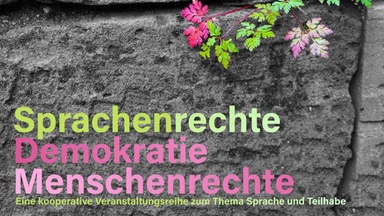
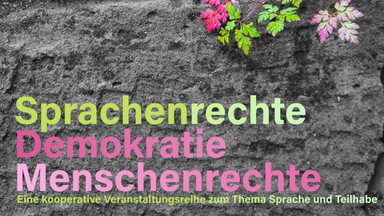
The event is part of the series “Language Rights – Democracy – Human Rights”
Languages are the foundation of understanding and participation. However, they can also be exploited for the opposite purpose: to exclude others and as an instrument of power. This event series aims to raise awareness that human rights and democracy are also based on the acceptance and respect of all people, along with all their languages. The following questions serve as a common thread throughout the events:
- What role does the way we handle languages play in the development of our democracy?
- What is the state of language equity, particularly in the education system, and how should language rights be structured there?
- How can we help shape a multilingual society?
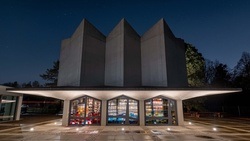
Location
Accessibility information
We don't have any accessibility information for this event.
You can find everything about accessibility at Rausgegangen here.






Noch mehr Events dieser Location-Page